Licensed & Insured Technicians
Heating & Furnace Repair
Safe, Fast Furnace Repairs — Including Carbon Monoxide Checks
Reliable repair services for gas and electric furnaces, ensuring safe and efficient winter heating.
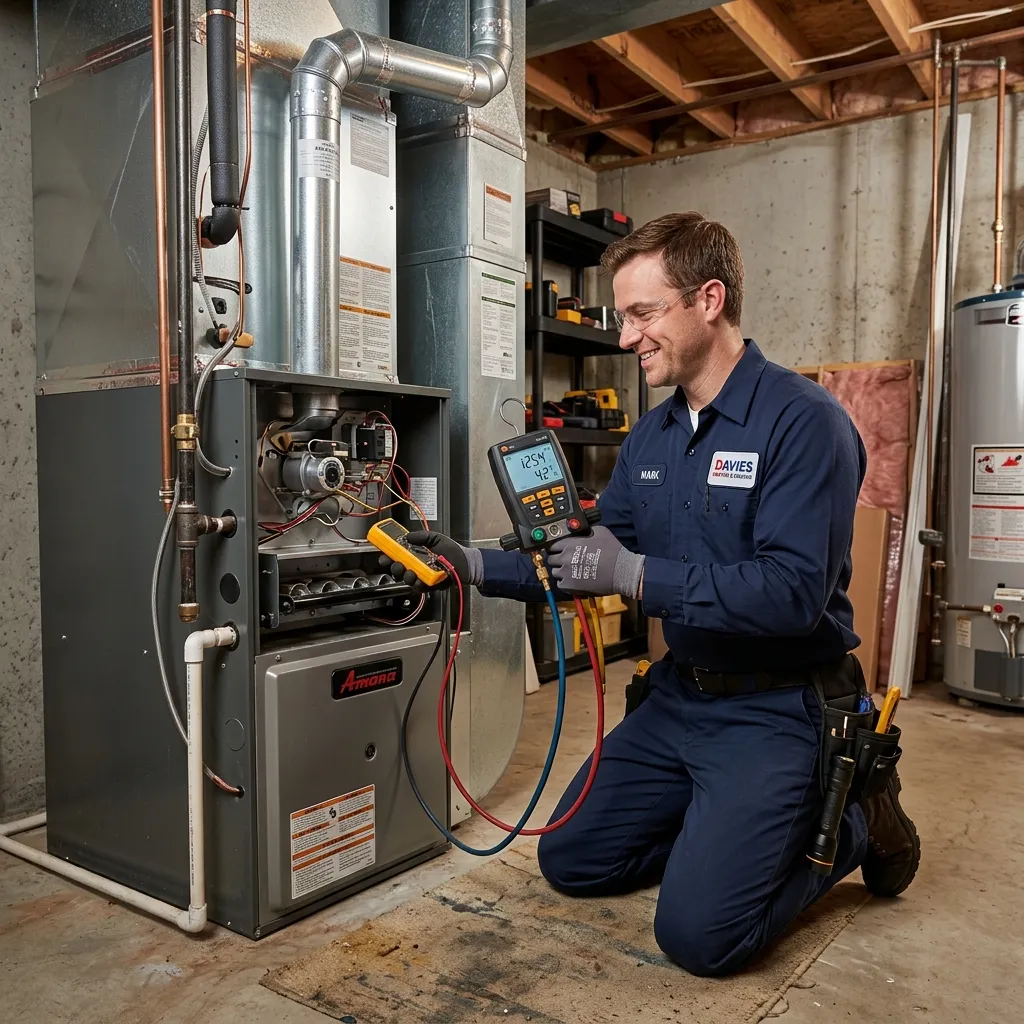
Expert Heating & Furnace Repair — What You Need to Know
A furnace failure in winter is not just uncomfortable — for vulnerable family members, it can be dangerous. At HVAC Master Pros, we treat heating system repairs with the same urgency as cooling emergencies. Our technicians are trained on gas and electric furnaces, dual-fuel heat systems, and fan coil units. Every heating repair includes a carbon monoxide safety inspection at no additional charge.
Common Furnace Problems We Diagnose
Gas furnace problems often trace back to a few key components. A faulty ignitor (the component that lights the burners) is one of the most common failures and is a straightforward replacement. A cracked heat exchanger is the most serious issue — it allows combustion gases, including carbon monoxide, to mix with your breathing air and must be addressed immediately. We also regularly repair failed limit switches, malfunctioning draft inducer motors, dirty flame sensors, and failing control boards.
Electric Heating Repairs
Electric furnaces and air handlers with electric heat strips fail differently. Common issues include burnt heating elements, tripped or failed sequencers (which stage the heating elements on in sequence), and electrical connection failures. We test every element and sequencer individually to identify which specific component has failed, rather than recommending a blanket replacement.
Our Heating & Furnace Repair Process
We check for gas leaks and carbon monoxide before any diagnostics begin.
We test heat exchangers, ignitors, gas valves, limit switches, and electrical components.
You receive a flat-rate price for the exact repair needed before we start.
We complete the repair, cycle the furnace through a full heating sequence, and confirm safe operation.
Frequently Asked Questions
Answers to the most common questions we hear from homeowners.
A cracked heat exchanger is the most dangerous furnace failure — it allows carbon monoxide into your breathing air. Warning signs: a yellow or flickering burner flame (should be steady blue), soot near the furnace, a chemical or formaldehyde-like odor, unexplained headaches when the heat runs, or a CO detector alarm. If you suspect this, shut off the furnace immediately and call us — do not run the system.
A hot surface ignitor replacement typically costs $150–$300 parts and labor. The ignitor itself is a $20–$50 part; the service call, diagnostic fee, and labor make up the rest. This is one of our most common furnace repairs — the failure is obvious: the inducer runs, the gas valve opens, but the burners never light.
Rapid short cycling is usually caused by overheating — the high-limit switch cuts the burners as a safety measure. Common causes: a severely clogged air filter blocking airflow, closed supply or return vents, a dirty blower wheel, or a failing limit switch. Start by replacing your air filter — this fixes about 40% of short-cycling complaints.
Heat pumps are more efficient (COP 2.0–4.0) in mild to moderate cold above 25–35°F. Below that threshold, efficiency drops and backup heat activates. In climates with sustained sub-freezing temperatures, a 96%+ AFUE gas furnace often provides lower operating costs. The best solution in many climates is a dual-fuel system: a heat pump for mild weather paired with a gas furnace as backup.
A well-maintained gas furnace lasts 18–25 years. Signs replacement is more economical than repair: the unit is over 15 years old, your heating bills have increased significantly, you've had two or more expensive repairs in the past two years, the heat exchanger is cracked, or the unit needs an inducer motor or control board — both of which cost nearly as much as a new entry-level furnace.