Licensed & Insured Technicians
Routine HVAC Maintenance
Prevent Breakdowns. Extend Lifespan. Lower Energy Bills.
Comprehensive seasonal tune-ups, chemical coil cleaning, and safety inspections to prevent costly breakdowns.
Expert Routine HVAC Maintenance — What You Need to Know
The average HVAC system that receives no maintenance will fail 30–40% sooner than one that receives annual tune-ups. An unmaintained system also consumes up to 25% more electricity to produce the same amount of cooling or heating. Our comprehensive maintenance visits go far beyond what a typical company calls a "tune-up" — we perform a full 21-point inspection on every visit.
What Our Maintenance Includes
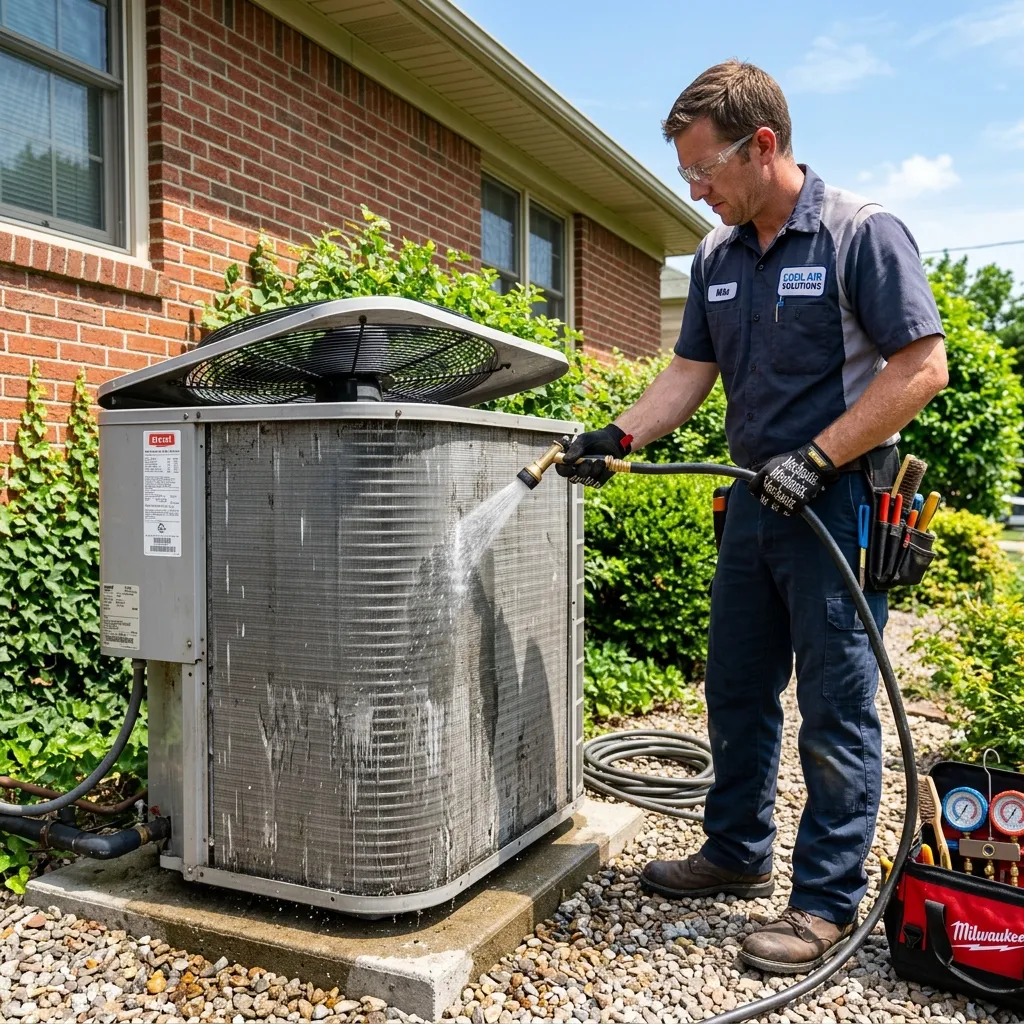
We start with the outdoor unit: chemically cleaning the condenser coils to remove dirt and debris that insulate the coils and reduce efficiency, checking all electrical connections and tightening loose terminals (a leading cause of compressor failure), lubricating fan motor bearings, and measuring refrigerant pressures. We then move to the air handler: cleaning the evaporator coil, clearing the condensate drain line with a pressurized flush, inspecting the blower wheel for buildup, and measuring static pressure and airflow. We finish with a full thermostat calibration.
Why Annual Maintenance Pays For Itself
A standard maintenance visit typically costs $89–$150. The average HVAC repair costs $300–$600. By catching a failing capacitor ($175 repair), a clogged drain line ($150 repair), or a refrigerant charge issue ($300+ repair) during a maintenance visit, we save you significantly on emergency call-out fees, after-hours charges, and the compound damage that a small problem causes when left undetected. Most major HVAC manufacturers also require documented annual maintenance to maintain their warranty coverage.
Our Routine HVAC Maintenance Process
Coil cleaning, electrical checks, refrigerant pressure measurement, and fan motor inspection.
Evaporator coil inspection, blower wheel cleaning, and condensate drain flushing.
We measure static pressure and airflow, then calibrate your thermostat for accuracy.
You receive a written maintenance report with any concerns flagged and prioritized.
Frequently Asked Questions
Answers to the most common questions we hear from homeowners.
For 1-inch filters: replace every 30–60 days with pets or allergies, every 60–90 days for average homes. For 4–5 inch media filters, once per year. MERV 8 is sufficient for most homes — it captures dust, pollen, and mold spores. MERV 11–13 adds pet dander for allergy sufferers. Avoid MERV 14+ in standard residential systems — the high restriction can strain the blower and freeze the coil.
A thorough tune-up includes: chemical condenser coil cleaning, evaporator coil inspection, refrigerant pressure measurement, electrical connection tightening, voltage and amperage checks on all motors, fan motor bearing lubrication, condensate drain flushing, blower wheel inspection and cleaning, thermostat calibration, filter replacement, and a written condition report. Be wary of $49 tune-up ads — at that price, they're typically only doing a visual inspection and filter change.
Yes, measurably. A dirty condenser coil alone increases energy consumption by 10–30%. A refrigerant charge that's 10% low reduces efficiency by 20%. Combined, a neglected system can cost 30–40% more to operate than a maintained one. Our customers regularly report $30–$80 per month in electric bill reductions after a thorough maintenance service.
Most major HVAC manufacturers (Carrier, Trane, Lennox, Rheem) require documented annual maintenance to keep the extended parts warranty valid. If your compressor fails at year 8 and you file a warranty claim, the manufacturer can request maintenance records and deny the claim if none exist. Our maintenance visits include a detailed written report that serves as official documentation — keep it with your equipment's original paperwork.
Schedule your AC tune-up in early spring (March–April) before summer heat arrives — any issues are caught before you need the system at full capacity. Schedule your heating tune-up in early fall (September–October) before cold weather. Avoid peak summer and winter months when HVAC companies are heavily booked with emergency repairs and wait times are much longer.